Desert Agriculture
UAE Farming: Mastering Arid Climate Solutions and Desert Agriculture

Mustashar Team

So the UAE is investing in farming. Making it a priority. This way, the country can have a food supply. It also helps to create jobs and boost the economy. The UAE wants to be a leader in high-tech farming. It is working hard to make that happen.
In this guide, we look at the types of farming that are changing the Middle Eastern landscape. We see what is new in farming in the desert and what people are doing to deal with the climate. We find out how the UAE is making its dry land good for growing food in a way that’s good for the environment, using things that work well locally and the latest technology. The Middle Eastern landscape is being defined by these agricultural subcategories, and the UAE is making a big change.
Quick Navigation:
The Reality of Arid Farming in the UAE
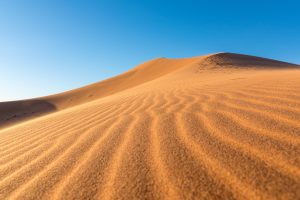
To understand how farming works in the UAE, you have to consider the challenges of the environment. Unlike places like Europe or the Americas, UAE farmers have to deal with dry conditions. The soil is sand, which means it can’t hold much water and is often salty.
Just because it’s dry doesn’t mean it’s dead. The local environment has always been home to plants like the Ghaf tree and other shrubs that can survive with water. Modern farming in areas looks at these plants and uses their strengths to grow crops. By focusing on growing crops that don’t need water but still produce a lot, farmers in the UAE are choosing crop types that can handle the heat and don’t need much water.
Soil Health and Salinity Management
One of the problems in dry areas is soil salinization. When water evaporates fast in the heat, it leaves behind salt that hurts plant roots. Local experts are now using biosaline agriculture. This means growing crops that can handle salt, like some kinds of quinoa, dates, and certain types of animal food. These crops do well in water that’s a little salty.
Desert Agriculture: Turning Sand into Gold
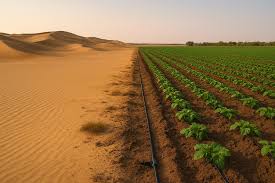
Desert agriculture in the United Arab Emirates has changed a lot over time. It used to be about traditional palm groves. Now we have what we call Smart Farms. The idea here is not to try to change the desert. Instead, we work with what the desert has to offer. For example, we get a lot of sunlight in the desert. This is usually a problem for plants that grow outside. Now we are using this sunlight to our advantage. We use panels to get power for machines that remove salt from water and for systems that keep greenhouses cool.
There is a technology that is really making a difference in the United Arab Emirates. This technology is called Liquid Nanoclay. A company from Norway called Desert Control made this technology. They tested it a lot in Dubai and Abu Dhabi. Liquid Nanoclay is a process. It puts a layer of clay around each grain of sand. This changes the sand into a soil that’s like a sponge. It holds onto water and nutrients. This means we do not need to use much water. We can use up to 50 percent water.
Innovative Climate Solutions: The Rise of CEA
As the climate changes around the world, the UAE is trying out ways to deal with it. The UAE is using itself as a test ground for climate solutions. The main part of this effort is Controlled Environment Agriculture, or CEA. Since the weather outside is often too harsh, the “environment” is moved indoors.
1. Hydroponics and Aeroponics
Hydroponics is a known method in the UAE. It grows plants in water that has the nutrients of soil. This helps farmers save a lot of water. Up to 90% compared to farming. Aeroponics is similar. Goes a step further. It sprays the roots of plants with nutrients. This method uses less water and helps plants grow faster.
2. Vertical Farming: Bustanica and Beyond
The UAE does not have land that can be used for farming. So the only way to grow more is to go up. The UAE has Bustanica, the world’s vertical farm, near Al Maktoum International Airport. These farms use LED lights to help plants grow. They make the light for plants to grow, so leafy greens, herbs, and strawberries can be grown all year round without using any pesticides.
3. Greenhouse Cooling Technologies
Standard greenhouses in the UAE would become ovens in July without cooling. Traditional evaporative cooling (using “fan and pad” systems) is being replaced by closed-loop systems and chilled-water circulation. These innovations ensure that the internal temperature remains a steady 22°C-25°C, even when the outside world is boiling.
Local Best Practices: What Works on the Ground
If you want to invest in or learn about farming in the UAE, there are some things to keep in mind for it to be successful. The International Center for Biosaline Agriculture and farming companies have figured these out over the years.
Precision Irrigation: We do not use flood irrigation anymore. Now we use surface drip irrigation, which puts water right where the roots are. This way, we do not waste water. Every drop is used.
Crop Selection: Farmers in the UAE are growing crops now. They are moving away from crops that need a lot of water, like alfalfa. Instead, they are growing crops that can handle conditions, like organic kale, tomatoes, and cucumbers in special greenhouses.
Data-Driven Decisions: Farmers are using sensors to track the soil and air. These sensors tell them how much water is in the soil, how humid it is, and how much light the plants are getting. This information is sent to the farmer’s phone so they can take care of any problems before they hurt the crops.
Regenerative Practices: Some farmers are raising animals and growing crops together. This helps create a system where everything works together. The animal waste is used to make compost, which makes the soil healthier and better for growing crops in the UAE farming system. UAE farming is getting better with these methods.
Regional Subcategories: From Al Ain to Ras Al Khaimah
While the UAE is a single nation, its agricultural subcategories vary by region:
Al Ain: Known as the “Garden City,” Al Ain benefits from higher groundwater levels and a long history of Aflaj (traditional irrigation channels). It remains a hub for date palm cultivation and dairy farming.
Abu Dhabi (Liwa & Western Region): This area is the frontline for desert agriculture research. Large-scale desert reclamation projects are common here, focusing on forestation and salt-tolerant forage.
Ras Al Khaimah & Fujairah: These emirates have a slightly more temperate climate and hilly terrain. They are better suited for fruit trees (like citrus and mangoes) and have higher natural rainfall, making them vital for traditional open-field farming.
The Road to 2051: UAE National Food Security Strategy
The United Arab Emirates government has a plan: it wants to be number one in the Global Food Security Index by the year 2051. This is not something the government wants to do; it is something that really needs to happen. Now the United Arab Emirates gets about 80 to 90 percent of its food from other countries. To change this, the United Arab Emirates needs to do a lot more to grow its food.
Some projects are supposed to help, like the Food Tech Valley in Dubai. This place is meant to bring in companies and researchers from all around the world. By creating a center for new farming ideas, the United Arab Emirates can share what it knows about growing food in the desert with other places that have similar problems, like some parts of Africa and the Mediterranean. The United Arab Emirates is good at growing food in the desert. It can help other countries that are facing the same issues.
Conclusion: A Greener Future for the Desert
The way farming in the UAE is changing is really amazing. People in the UAE are using desert farming. They are using new technology to deal with the weather. This is an example of how people can turn problems into new ideas. The UAE is using ideas like the Falaj systems and new ideas like vertical farms to show the world what can be done.
As we go on, people will keep thinking about how to do things in a way that’s good for the earth. The main goal is to grow food with less water and energy. This means that people in the UAE will be able to eat food that is grown locally, no matter how hot it is outside. For people who invest money farmers and people who buy food the message is clear: the UAE farming is getting better and better. The UAE farming is just getting started. The UAE farming is really. This is only the beginning of the UAE farming.
Frequently Asked Questions
What are the main crops grown in the UAE?
Dates are the primary crop, but the UAE now successfully grows tomatoes, cucumbers, leafy greens, strawberries, and even mushrooms using indoor farming techniques.
Is UAE farming sustainable?
Yes, modern methods like hydroponics and the use of solar energy are making UAE farming increasingly sustainable by drastically reducing water and carbon footprints.
How does the UAE handle water scarcity for agriculture?
The UAE uses a mix of desalinated water, treated sewage effluent (TSE) for non-edible crops, and highly efficient drip irrigation to manage its limited water resources.
Found this article helpful?
Explore more insights and tips on our blog